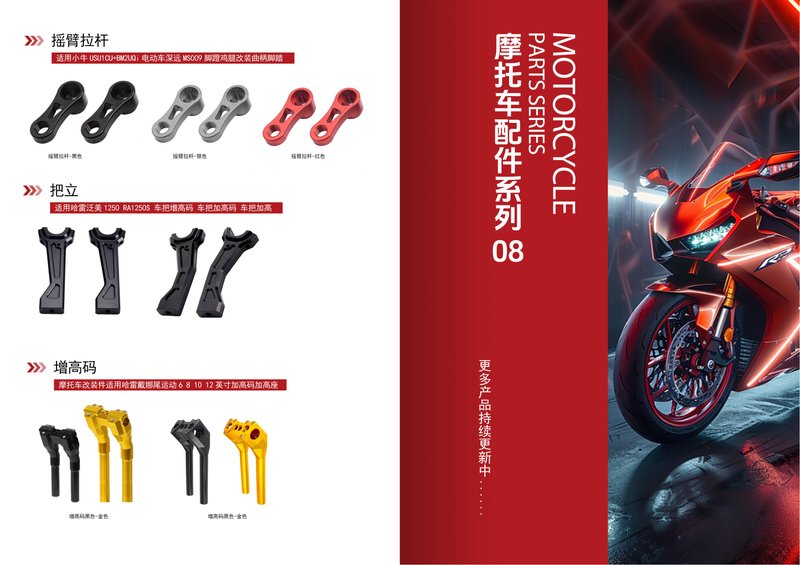
When a product combines plastic housings with metal components, success depends on how well the injection mold and the machined parts fit together. At Fuxingwang Hardware Products Co., Ltd. (Jiangmen Fuxingwang Hardware), we have supported this kind of mixed manufacturing since 2012, producing motorcycle parts and precision CNC parts for buyers worldwide. In this guide, we share practical lessons on matching injection molds with CNC machining so you can avoid mismatches, control costs, and get parts that assemble the first time.
Why Mold and CNC Compatibility Matters
Injection molding and CNC machining follow different rules. Molds are built to a nominal shape and then adjusted with steel-safe corrections, while machined parts are cut directly to a programmed toolpath. When a metal insert, bracket, or shaft sits inside a plastic housing, every tolerance and datum must be coordinated. A mismatch of 0.1 mm can cause loose fits, stress cracks, or rejected assemblies.
Matching the two processes early — before either tool is cut — is far cheaper than fixing problems later. That is why we encourage buyers to share both the plastic and metal drawings at the quotation stage.
Key Factors When Matching Molds with CNC Parts
1. Define the Interface Datums First
Decide which surface controls the fit. In many motorcycle parts, the machined metal boss or mounting hole is the master datum, and the mold is adjusted around it. Once datums are agreed, both the mold maker and the CNC programmer work from the same reference. This single step prevents most assembly conflicts.
2. Account for Shrinkage and Machining Tolerance
Plastic shrinks as it cools, typically 0.4% to 2% depending on material. Metal precision CNC parts hold tolerances of ±0.01 mm or tighter. The mold must be sized so that, after shrinkage, the plastic still accepts the machined insert with the intended fit. We usually agree on a fit class — loose, transition, or interference — and then assign tolerances to both sides of the interface.
3. Choose Materials That Work Together
Thermal expansion differs between plastics and metals. For parts exposed to engine heat, such as motorcycle components, we recommend matching the metal insert material to the housing's expansion behavior. Stainless steel inserts in glass-filled nylon housings, for example, are common in our motorcycle parts manufacturer projects because they resist corrosion and hold threads well.
4. Design for Insert Molding or Post-Assembly
There are two routes: mold the plastic over the metal insert, or machine the metal part and assemble it afterward. Insert molding gives strong, leak-free joints but requires the insert to be fixed precisely in the tool. Post-assembly is more flexible for low volumes and easier to rework. For prototypes, we often machine both the plastic (from tooling board or a simple mold) and the metal, then validate the fit before committing to production tooling.
5. Plan the Tooling Around CNC Lead Times
Molds take weeks to build; CNC parts can be cut in days. A practical sequence is to finish the custom CNC machining China prototype first, use it to check the mold cavity dimensions, and then cut steel. This approach shortens the debugging loop and reduces the risk of expensive mold corrections.
How Fuxingwang Handles Mixed Projects
Our 2,000 sqm factory in Jiangmen runs more than 100 CNC machines, giving us the capacity to produce metal components and collaborate closely with mold partners on the same project. We review drawings for interface conflicts, propose tolerance stacks, and supply machined inserts or prototypes for mold trials. Because we also produce motorcycle parts, we understand the durability and safety demands of two-wheel applications.
Typical steps for a matched project:
- Review plastic and metal drawings together and flag interface risks.
- Propose datum scheme, fit class, and tolerance allocation.
- Machine prototype precision CNC parts for fit validation.
- Coordinate with the mold maker on cavity dimensions and insert pockets.
- Run first-article inspection on the assembled unit before mass production.
Common Mistakes to Avoid
- Quoting the mold and CNC parts separately without checking the interface.
- Ignoring plastic shrinkage when sizing pockets for metal inserts.
- Applying tight tolerances everywhere instead of only at critical fits.
- Skipping prototype validation to save time, then paying for mold rework.
Each of these adds cost and delay. A short review at the start usually removes the risk.
Get a Free Quote from a Trusted CNC Partner
If you are developing a product that pairs plastic housings with machined metal parts, send us your drawings. Fuxingwang Hardware Products Co., Ltd. will review the mold and CNC interfaces, recommend tolerances, and provide a free quotation for CNC machining and related tooling support. Contact our team today with your 2D and 3D files, and let us help you build parts that fit right the first time.