Hard anodizing is one of the most requested surface finishes for motorcycle components, and for good reason. It turns a relatively soft aluminum surface into a dense, wear-resistant oxide layer that can survive heat, friction, and road grit. But for buyers sourcing from a motorcycle parts manufacturer, the finish is only as good as the machining underneath it. This article explains how hard anodizing works, where it belongs on a bike, and how to specify it correctly when ordering precision CNC parts.
What Hard Anodizing Actually Does
Hard anodizing (often called Type III anodizing) is an electrochemical process that grows an aluminum oxide layer on the part surface. Unlike decorative Type II anodizing, which typically produces 5–25 µm of coating, hard anodizing builds 25–50 µm and can go thicker on request. The coating is harder, denser, and more abrasion-resistant, and because it is grown from the base metal rather than applied on top, it does not chip or peel like paint or plating.
For motorcycle use, the practical benefits are:
- Wear resistance on fork sliders, brake caliper pistons, and suspension linkages
- Corrosion protection against road salt, rain, and wash-down chemicals
- Dielectric insulation where electrical isolation matters
- Dimensional stability when the coating thickness is accounted for in the drawing
Which Motorcycle Parts Benefit Most
Fork tubes and stanchions
Hard anodized fork tubes reduce stiction and resist stone chips that would otherwise damage the sealing surface. The coating must be uniform along the sliding zone, which puts pressure on the CNC machining stage: concentricity and surface finish before anodizing determine the final result.
Brake and clutch components
Caliper pistons, master cylinder bodies, and lever pivots benefit from the hardness and corrosion resistance of Type III coatings. Note that threaded features and sealing bores need masking or post-finish sizing.
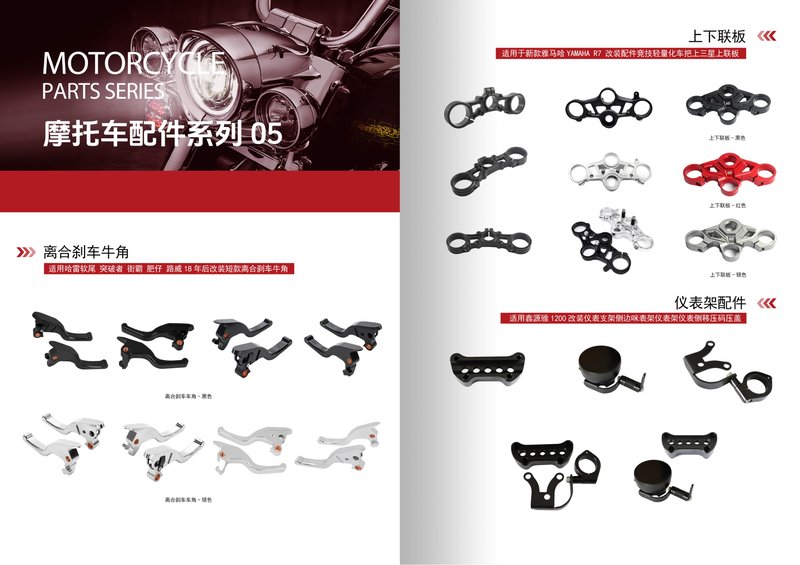
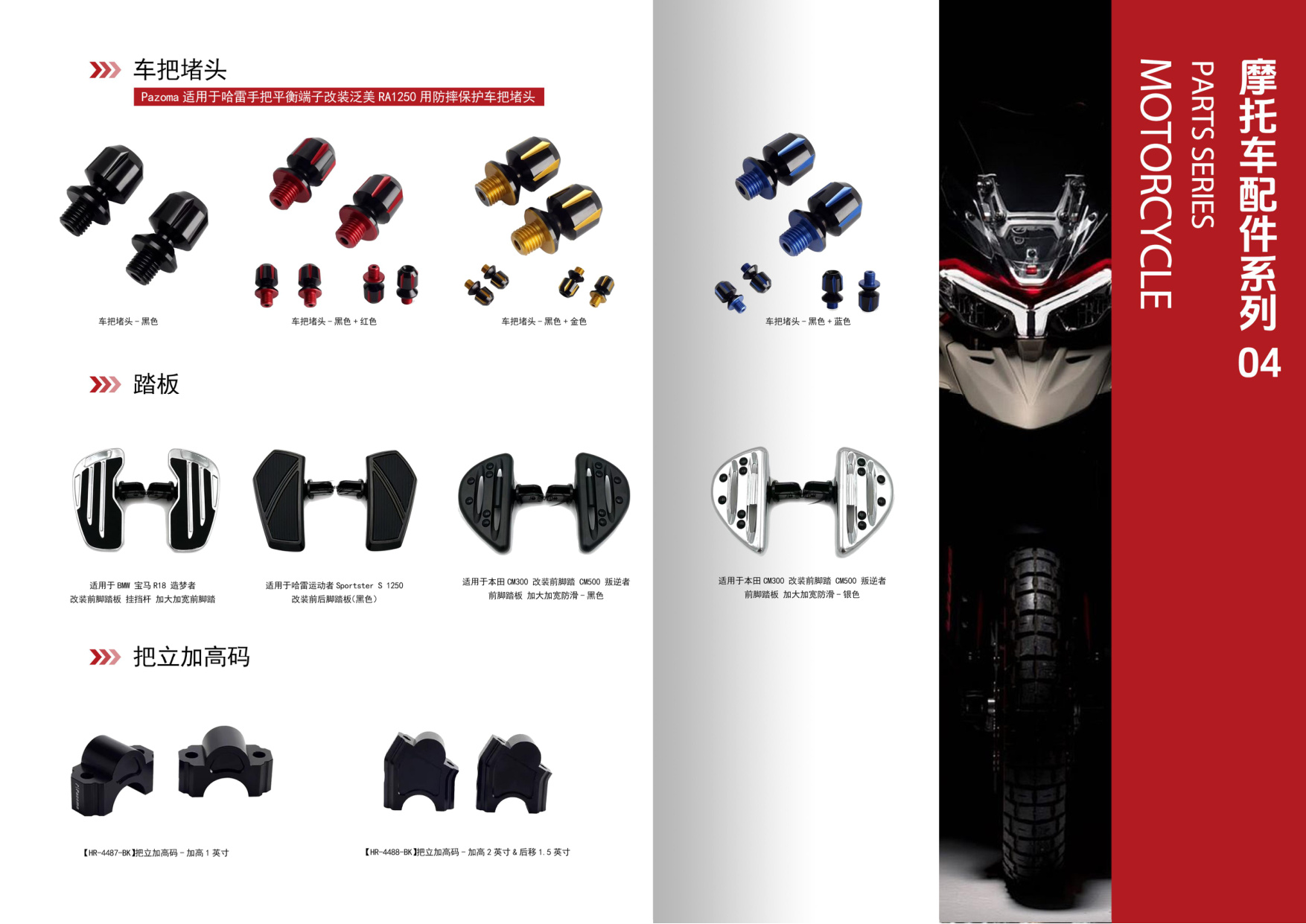
Wheels, triple clamps, and rearsets
These are often chosen for appearance as much as function. A black or bronze hard anodized finish on a machined billet part looks premium and holds up to boot scuffs and brake dust far better than paint.
Engine and drivetrain brackets
Mounting brackets, case guards, and chain adjusters see vibration and grit. Hard anodizing keeps them looking serviceable through multiple seasons.
Alloy Selection Matters
Hard anodizing responds very differently across aluminum grades. 6061-T6 is the workhorse for custom CNC machining of motorcycle parts and anodizes predictably with good hardness. 7075-T6 produces the hardest, most wear-resistant coating but is less forgiving of surface defects and can show color variation. Cast alloys (such as A356) anodize unevenly because of silicon content and are usually a poor choice for cosmetic hard anodizing.
If your design calls for 7075, expect tighter process control and possibly a slight color shift between batches. A capable supplier will discuss this before production rather than after.
Design Rules for CNC Parts That Will Be Hard Anodized
Because the coating grows both outward and inward, roughly half into the substrate, designers must plan for it:
- Allow for thickness on mating surfaces. A 50 µm coating adds about 25 µm per side. Precision bores and shaft fits need pre-finish dimensions adjusted accordingly.
- Specify masking on threads and electrical contact points. Anodized threads bind and lose conductivity.
- Avoid sharp internal corners. Coating builds unevenly in tight radii and can crack at sharp edges.
- Control surface finish before anodizing. The coating follows the machined texture; a 0.8 µm Ra finish before anodizing reads smoother after.
- Use generous fillets and deburr thoroughly. Burrs trap solution and cause burn marks or pitting.
Why Machining Quality Determines Finish Quality
Anodizing cannot hide tool marks, chatter, or inconsistent radii; it amplifies them. This is why buyers sourcing custom CNC machining China should evaluate the machine shop as much as the anodizing line. A factory with a stable process, in-house inspection, and documented first-article reports will deliver parts where the coating thickness, color, and fit are repeatable across production runs.
Fuxingwang Hardware Products Co., Ltd. (Jiangmen Fuxingwang Hardware), founded in 2012, operates a 2,000 m² facility with more than 100 CNC machines, producing motorcycle parts and custom machined components. Machining, deburring, and finish coordination are handled under one roof, which shortens lead times and keeps tolerances consistent from prototype to volume order.
What to Put on Your Drawing
To get an accurate quote and a repeatable finish, include on the drawing:
- Alloy and temper (for example, 6061-T6 or 7075-T6)
- Anodizing type and thickness (Type III, 25–50 µm)
- Color and gloss target, with a reference sample if color is critical
- Masking locations for threads, bores, and grounding points
- Critical dimensions and whether they apply before or after finishing
- Cosmetic acceptance criteria for the visible surfaces
Get a Free Quote on Your Next Project
Whether you need hard anodized fork components, billet brackets, or a full run of precision CNC parts, the fastest way to move forward is to send your drawings and requirements for review. Fuxingwang Hardware will confirm alloy, finish specification, tolerances, and lead time, and return a free quotation. Send your 2D drawings or 3D files today and let our team show you what a well-controlled machining and finishing process looks like.