Introduction to Build-to-Print Machining
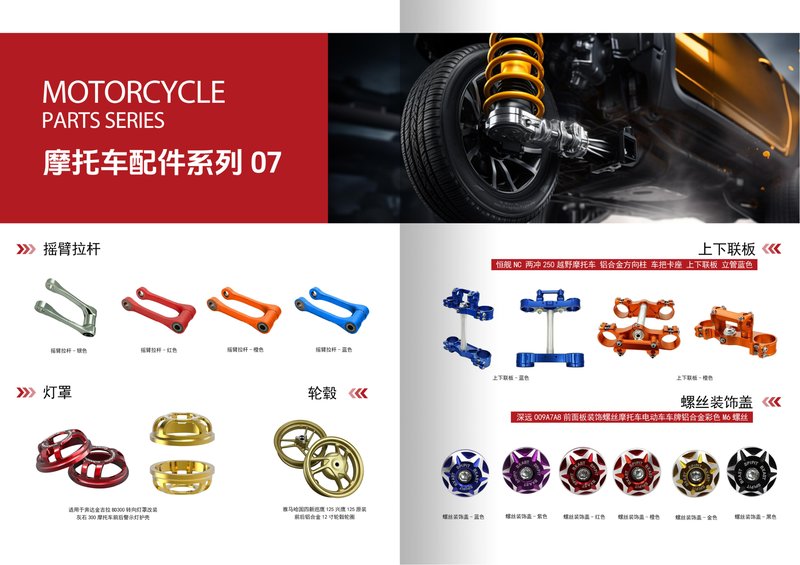
Build-to-print machining is a cornerstone of modern manufacturing, where a customer provides detailed drawings and specifications, and the manufacturer produces parts exactly to those requirements. For industries like automotive and motorcycle, where precision CNC parts are critical, even minor oversights can lead to expensive delays and functional failures. As a motorcycle parts manufacturer with over a decade of experience, Fuxingwang Hardware Products Co., Ltd. has seen firsthand how common pitfalls can derail projects. In this article, we'll explore these pitfalls and offer practical advice to help you avoid them.
Pitfall 1: Incomplete or Ambiguous Drawings
The most frequent issue in build-to-print machining is incomplete or unclear drawings. Missing dimensions, undefined tolerances, or ambiguous callouts force machinists to make assumptions—often leading to non-conforming parts. For CNC machining, every detail matters, from thread specifications to surface finish requirements.
How to avoid it:
- Use standard drafting practices (e.g., ASME Y14.5) for geometric dimensioning and tolerancing (GD&T).
- Provide 3D models alongside 2D drawings to clarify complex geometries.
- Clearly specify material, heat treatment, and coating requirements.
Pitfall 2: Ignoring Material and Machinability
Customers often specify materials based on design intent without considering machinability. For example, certain stainless steels or titanium alloys can be challenging for CNC machining, leading to longer cycle times, tool wear, and higher costs. In motorcycle parts, where strength-to-weight ratio is crucial, material choice directly impacts performance and manufacturability.
How to avoid it:
- Consult your manufacturer early about material alternatives that meet functional needs.
- Consider post-processing requirements (e.g., anodizing, plating) that may affect material selection.
- For custom CNC machining China suppliers, ask for a machinability rating and cost impact.
Pitfall 3: Overly Tight Tolerances
While precision is vital for precision CNC parts, unnecessarily tight tolerances drive up costs and lead times. Machinists may need specialized tooling or additional inspection steps. In build-to-print, if tolerances are not functionally justified, they become a burden.
How to avoid it:
- Apply tolerances only where necessary for fit, form, and function.
- Use GD&T to define datum reference frames and allow for bonus tolerance where applicable.
- Discuss tolerance stack-ups with your manufacturer to optimize design.
Pitfall 4: Lack of Communication on Volume and Lead Time
Build-to-print projects often fail when volume expectations and lead times are misaligned. A motorcycle parts manufacturer may quote based on a certain batch size, but if volumes change, pricing and scheduling can suffer. Similarly, ignoring lead times for material procurement or specialized processes can cause delays.
How to avoid it:
- Provide accurate annual usage forecasts and batch sizes.
- Clarify whether the quote is for prototype, low-volume, or mass production.
- Discuss expedited options and potential bottlenecks upfront.
Pitfall 5: Neglecting Quality Documentation
For critical applications, especially in motorcycles, quality documentation such as First Article Inspection (FAI) reports, material certs, and PPAP are essential. Some buyers overlook these requirements, leading to compliance issues or rejected shipments. A reputable custom CNC machining China partner will have robust quality systems, but it's a two-way street.
How to avoid it:
- Specify inspection requirements and documentation in the PO.
- Request sample inspection reports during the quoting phase.
- Ensure your manufacturer is ISO 9001 certified or equivalent.
Pitfall 6: Underestimating Prototyping and Testing
Skipping prototyping to save time often backfires. For precision CNC parts, a prototype validates design, material, and fit before mass production. Without it, you risk costly tooling modifications and production delays.
How to avoid it:
- Always produce a prototype for new or complex designs.
- Test prototypes under real-world conditions.
- Use feedback to refine drawings before full production.
Pitfall 7: Choosing the Wrong Manufacturing Partner
Not all CNC machining suppliers are created equal. Some lack the equipment, expertise, or quality systems to handle build-to-print projects. With 100+ CNC machines and a 2000sqm factory, Fuxingwang Hardware Products Co., Ltd. has the capacity and experience to avoid these pitfalls. But buyers must vet potential partners carefully.
How to avoid it:
- Visit the factory or request a virtual tour.
- Ask for references in your industry.
- Evaluate their engineering support and communication responsiveness.
Conclusion: Partner with a Reliable Build-to-Print Expert
Avoiding these pitfalls requires collaboration, clear communication, and a manufacturer who understands the nuances of CNC machining. At Fuxingwang Hardware Products Co., Ltd., we've been a trusted motorcycle parts manufacturer and custom CNC machining China provider since 2012. Our team is ready to review your drawings and provide a free quote. Whether you need precision CNC parts for motorcycles or other applications, we'll help you navigate build-to-print challenges with ease.
Ready to get started? Send us your drawings today for a free quote and let our experts bring your designs to life.