In modern manufacturing, the line between turning and milling has blurred. For buyers sourcing precision CNC parts, understanding how these two operations are combined — and why it matters — can mean the difference between parts that fit the first time and costly rework. At Fuxingwang Hardware Products Co., Ltd. (Jiangmen Fuxingwang Hardware), a motorcycle parts manufacturer and custom CNC machining China supplier founded in 2012, we run both operations under one roof across a 2,000 sqm factory with more than 100 CNC machines. Here is what turn-mill capability really means for your project.
What Is Combined Turning and Milling?
Turning rotates the workpiece against a stationary cutting tool to create cylindrical features — shafts, bores, threads, and tapers. Milling rotates the cutting tool to produce flats, slots, pockets, and complex contours. Traditionally these were separate operations on separate machines, often in separate shops.
Combined turning and milling — often called turn-mill or mill-turn — performs both operations on a single machine platform, typically a multi-axis lathe with live tooling or a turn-mill center with a B-axis. The workpiece stays clamped in one position while the machine switches between turning and milling functions.
Why Combining Operations Improves Precision CNC Parts
1. Fewer Setups, Less Stack-Up Error
Every time a part is unclamped and re-fixtured, a small positioning error is introduced. On a part with concentricity or perpendicularity requirements — common in motorcycle components such as axles, fork caps, and brake caliper mounts — those errors stack up. Turn-mill machining completes concentric and perpendicular features in one setup, so tolerances hold tighter and repeatably.
2. Shorter Lead Times
Moving a part between machines adds queue time, handling, and paperwork. When turning and milling happen in one cycle, a job that might take three setups on three machines can finish in a single operation. For buyers sourcing CNC machining services from overseas, compressed cycle time directly shortens production schedules and reduces freight-window pressure.
3. Better Surface Quality and Tool Life
Combined machines allow live tooling to interpolate features that would otherwise require EDM or secondary drilling. Controlled feeds and speeds, plus rigid single-setup clamping, reduce chatter on thin-walled parts and extend tool life — a practical advantage when machining aluminum and steel motorcycle parts in volume.
4. Design Freedom for Complex Geometries
Multi-axis turn-mill platforms can machine angled holes, cross-drilled ports, and sculpted contours that would be difficult or impossible with two-axis turning alone. This lets engineers design parts as a single piece instead of assemblies, improving strength and reducing part count.
Where Combined Machining Fits in Motorcycle Parts Production
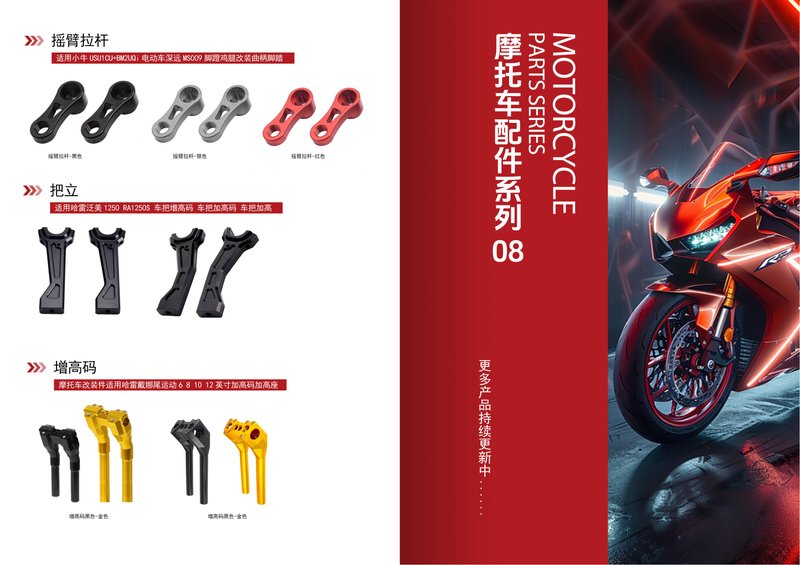
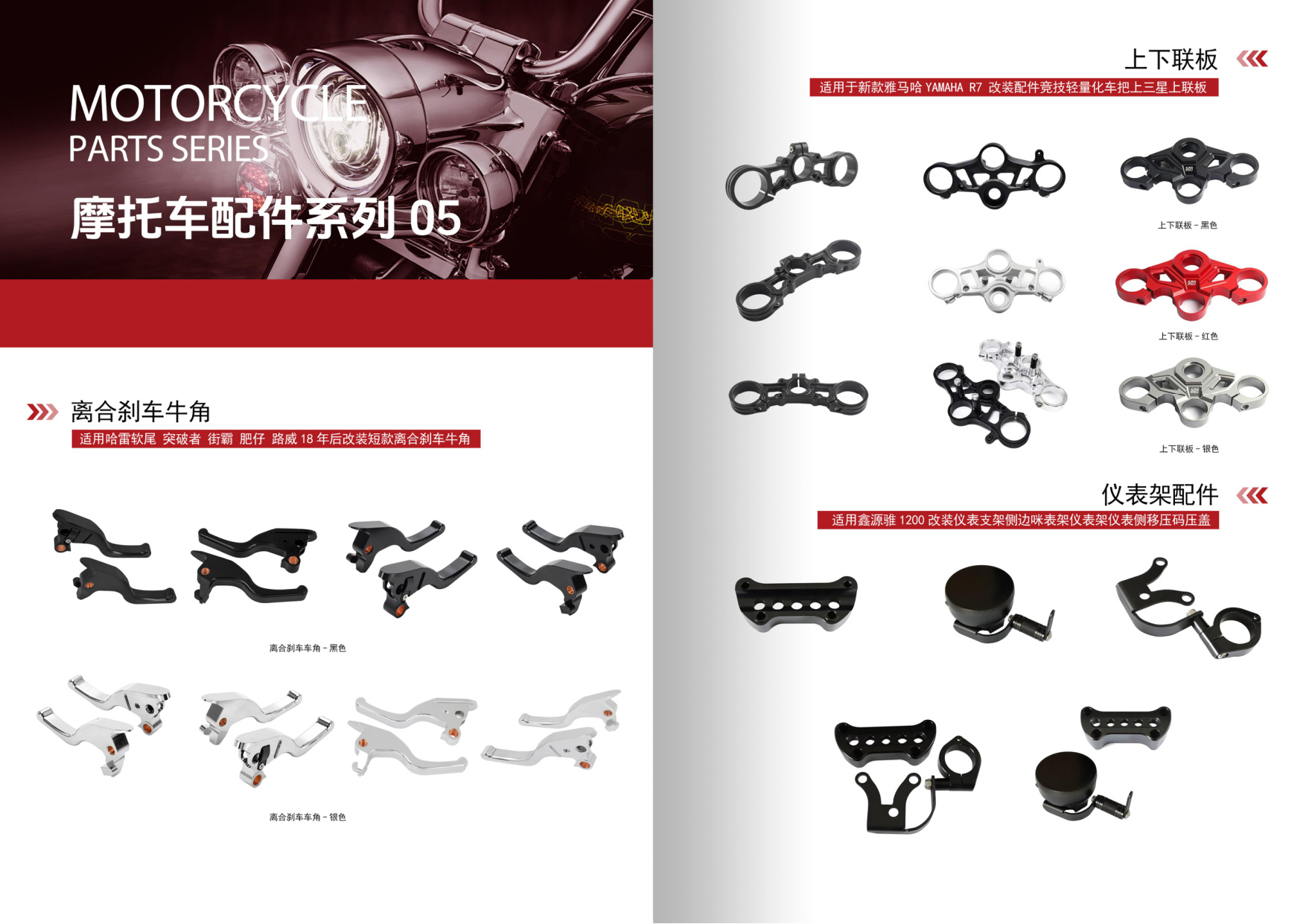
Motorcycle components are a natural fit for turn-mill work. Typical examples include:
- Axles and spacers — turned diameters with milled flats and cross-holes.
- Fork and shock components — threaded bodies with milled adjustment features.
- Engine and drivetrain parts — sprocket adapters, shift shafts, and bearing housings.
- Custom brackets and mounts — mixed cylindrical and prismatic geometry in one part.
Because Fuxingwang serves both motorcycle OEMs and general industrial buyers, our custom CNC machining China service is built around this mixed-geometry work. Our 100+ CNC machines include turning centers with live tooling, allowing us to quote and produce turn-mill parts without outsourcing operations.
What to Consider Before Specifying Turn-Mill Parts
Part Size and Machine Envelope
Turn-mill centers have bar capacity and swing limits. Share your maximum diameter and length early so the process is matched to the right machine.
Tolerance and Material
Specify critical tolerances only where they matter. Turn-mill holds tight concentricity well, but over-tolerancing non-functional features adds cost without benefit. Material choice — aluminum, stainless steel, alloy steel, brass — affects tooling and cycle time, so include it on the drawing.
Volume and Repeatability
Combined machining pays off most at medium to high volumes where setup reduction compounds. For prototypes, it still shortens iteration time. A manufacturer with in-house turning and milling can scale either way.
Why Work With Fuxingwang
Founded in 2012, Fuxingwang Hardware Products Co., Ltd. has grown into a 2,000 sqm facility in Jiangmen, Guangdong, equipped with over 100 CNC machines covering turning, milling, and combined turn-mill operations. We produce precision CNC parts and motorcycle components for customers worldwide, with in-house quality control and drawing-based quoting.
If you are evaluating suppliers for a turn-mill project, the fastest way to get a realistic answer is to send your drawings. We review geometry, tolerances, and material, then recommend the most efficient process route — turning, milling, or a combined cycle.
Get a Free Quote on Your Turn-Mill Project
Send us your drawings today for a free, no-obligation quote. Whether you need prototype quantities or ongoing production of precision CNC parts, our team will respond with pricing, lead time, and process recommendations. Contact Fuxingwang Hardware Products Co., Ltd. and put 100+ CNC machines and over a decade of custom CNC machining China experience behind your next project.