CNC Lathe vs. Machining Center: What's the Real Difference?
If you are sourcing precision CNC parts, one of the first questions your supplier should ask is simple: does this part belong on a lathe or a machining center? The answer affects cost, lead time, surface finish, and how repeatable your parts are over a production run. At Fuxingwang Hardware Products Co., Ltd. (Jiangmen Fuxingwang Hardware), we have run both types of equipment side by side since 2012, producing motorcycle parts and custom components for buyers worldwide. Here is a practical breakdown of how the two processes differ and how to choose between them.
The CNC Lathe: Built for Round, Rotational Parts
A CNC lathe spins the workpiece while a stationary (or slowly moving) tool cuts material away. This turning motion makes lathes the natural home for parts that are fundamentally cylindrical.
What a CNC lathe does best
- Shafts, axles, pins, and spacers — long, round parts with tight diameter tolerances
- Bushings and bearing housings — where bore roundness and concentricity matter
- Threaded fasteners and fittings — external and internal threads cut in a single setup
- High-volume round parts — bar-fed lathes run continuously with minimal operator intervention
For a motorcycle parts manufacturer, lathes are the workhorses behind wheel spacers, brake pins, suspension bushings, and engine-mount hardware. Because the part rotates around a single axis, a lathe typically delivers excellent concentricity without repositioning the workpiece — a major advantage for precision CNC parts that must fit a mating bore.
Where lathes fall short
A standard two-axis lathe cannot drill off-axis holes, cut flats, or mill pockets. Those features require either a live-tooling lathe (mill-turn) or a second operation on a machining center. If your part is mostly round but has a few side features, ask your supplier whether a mill-turn machine can complete it in one setup — it often saves a handling step and protects tolerances.
The Machining Center: Flexibility for Complex Geometry
A machining center holds the workpiece still and moves a rotating spindle through multiple axes. Vertical machining centers (VMCs) are the most common; horizontal and five-axis machines handle heavier or more complex work.
What a machining center does best
- Prismatic and block-shaped parts — brackets, plates, covers, and housings
- Multi-feature parts — pockets, slots, drilled hole patterns, tapped holes, and contoured surfaces in one setup
- Tight positional tolerances — hole-to-hole location and flatness across a face
- Prototype and low-volume work — no bar stock or special tooling required
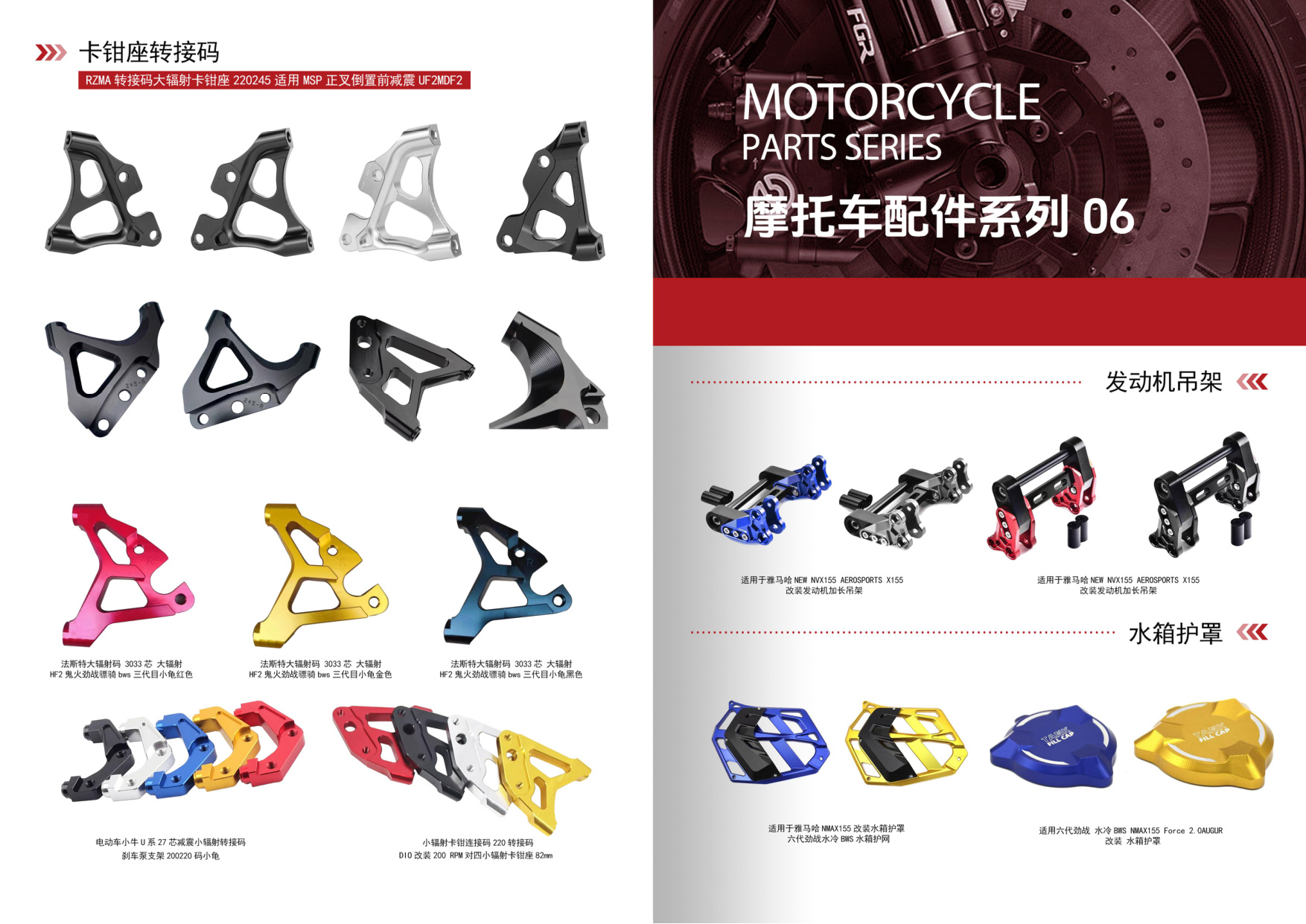
In motorcycle manufacturing, machining centers produce fork clamps, engine covers, brake caliper brackets, and custom mounting plates. When a part needs features on several faces, a four- or five-axis machining center can reduce the number of setups — and every eliminated setup removes a source of stacking error.
Where machining centers cost more
For a simple round part, a machining center is usually slower and more expensive than a lathe. Cycle times are longer, and the machine is better reserved for the geometry it uniquely handles. Choosing a machining center for a plain shaft is a common way buyers unknowingly pay too much for CNC machining.
How to Decide: A Practical Checklist
When reviewing a drawing, our engineering team applies a short decision framework. Buyers can use the same logic:
- Is the part primarily rotational? If most features share a centerline, start with a lathe.
- Are there off-axis holes, flats, or pockets? If yes, plan for a machining center or a mill-turn machine.
- What is the volume? High-volume round parts favor bar-fed turning; low-volume complex parts favor machining centers.
- What tolerances are critical? Concentricity and roundness point to turning; flatness and hole position point to milling.
- Can one machine finish the part? Fewer setups generally mean better accuracy and lower cost.
Why the Machine Mix Matters at Fuxingwang
Fuxingwang operates a 2,000 m² factory with more than 100 CNC machines, including lathes, turning centers, and vertical machining centers. That mix lets us route each job to the process that fits it — turning for round motorcycle parts, milling for brackets and covers, and mill-turn for parts that need both. As a custom CNC machining China supplier, we also handle the surrounding steps: material selection, fixturing, in-process inspection, and surface finishing, so parts arrive ready to assemble.
Get a Free Quote on Your Drawings
The fastest way to find out whether your part belongs on a lathe or a machining center is to let our engineers review it. Send us your 2D drawings or 3D models (STEP, IGES, or PDF) with material, tolerance, and quantity requirements, and we will recommend the most cost-effective process and return a free quotation — typically within 24 to 48 hours. Whether you need a single prototype or a production run of precision CNC parts, Fuxingwang is ready to quote. Contact us today with your drawings.