CNC Lathe vs. Machining Center: A Practical Guide for Buyers
If you are sourcing precision CNC parts—whether for a motorcycle, an industrial assembly, or a consumer product—one of the first questions your manufacturing partner will ask is whether the job belongs on a CNC lathe or a machining center. The answer affects cost, lead time, tolerances, and even the design of your part. At Fuxingwang Hardware Products Co., Ltd. (Jiangmen Fuxingwang Hardware), we run both technologies side by side in our 2,000 sqm factory, with more than 100 CNC machines supporting motorcycle parts manufacturer programs and general custom CNC machining China projects. Here is how to tell the two apart and choose the right process.
The Core Difference: Rotating Workpiece vs. Rotating Tool
How a CNC lathe works
On a CNC lathe, the workpiece spins while a stationary (or lightly driven) cutting tool removes material. This turning operation is ideal for parts that are fundamentally round or cylindrical: shafts, axles, bushings, spacers, pins, wheel hubs, and threaded fasteners. A modern lathe with live tooling and a subspindle can also mill flats, drill cross-holes, and cut slots, which makes it surprisingly capable for complete parts.
How a machining center works
On a machining center, the workpiece is clamped to a table and the spindle rotates the tool. Three-axis vertical machining centers (VMCs) handle prismatic, boxy, or plate-like parts; four- and five-axis machines add rotary movement so complex geometries can be cut in a single setup. Typical work includes brackets, engine covers, mounting plates, housings, linkage arms, and fixtures.
Comparing the Two for Precision CNC Parts
Part geometry
If your part is mostly round and symmetrical, a lathe is usually faster and cheaper per piece because the setup is simple and material removal is efficient. If your part has pockets, ribs, angled faces, or multiple features on different planes, a machining center is the natural choice. Many real-world parts are hybrids—a turned body with milled flats and drilled holes—which is why turn-mill machines and multi-setup workflows are common.
Tolerance and surface finish
Both processes deliver tight tolerances when properly controlled. Turning excels at diameter and roundness control, often holding ±0.005 mm on critical diameters. Milling excels at positional accuracy across flat features. For precision CNC parts such as motorcycle brake components or suspension linkages, the deciding factor is usually which features are critical, not which machine is "better."
Volume and cost
For high-volume round parts, automatic bar feeders on lathes allow lights-out production and low unit cost. For low-to-medium volume prismatic parts, a machining center with quick-change fixturing keeps setup time down. In both cases, the number of setups drives cost—designing parts that can be machined from one or two sides saves money.
Material considerations
Aluminum, brass, stainless steel, and alloy steel all machine well on both platforms. Harder materials may favor rigid machining centers, while long, slender parts may require the lower cutting forces of turning or the support of a tailstock.
What This Means for Motorcycle Parts
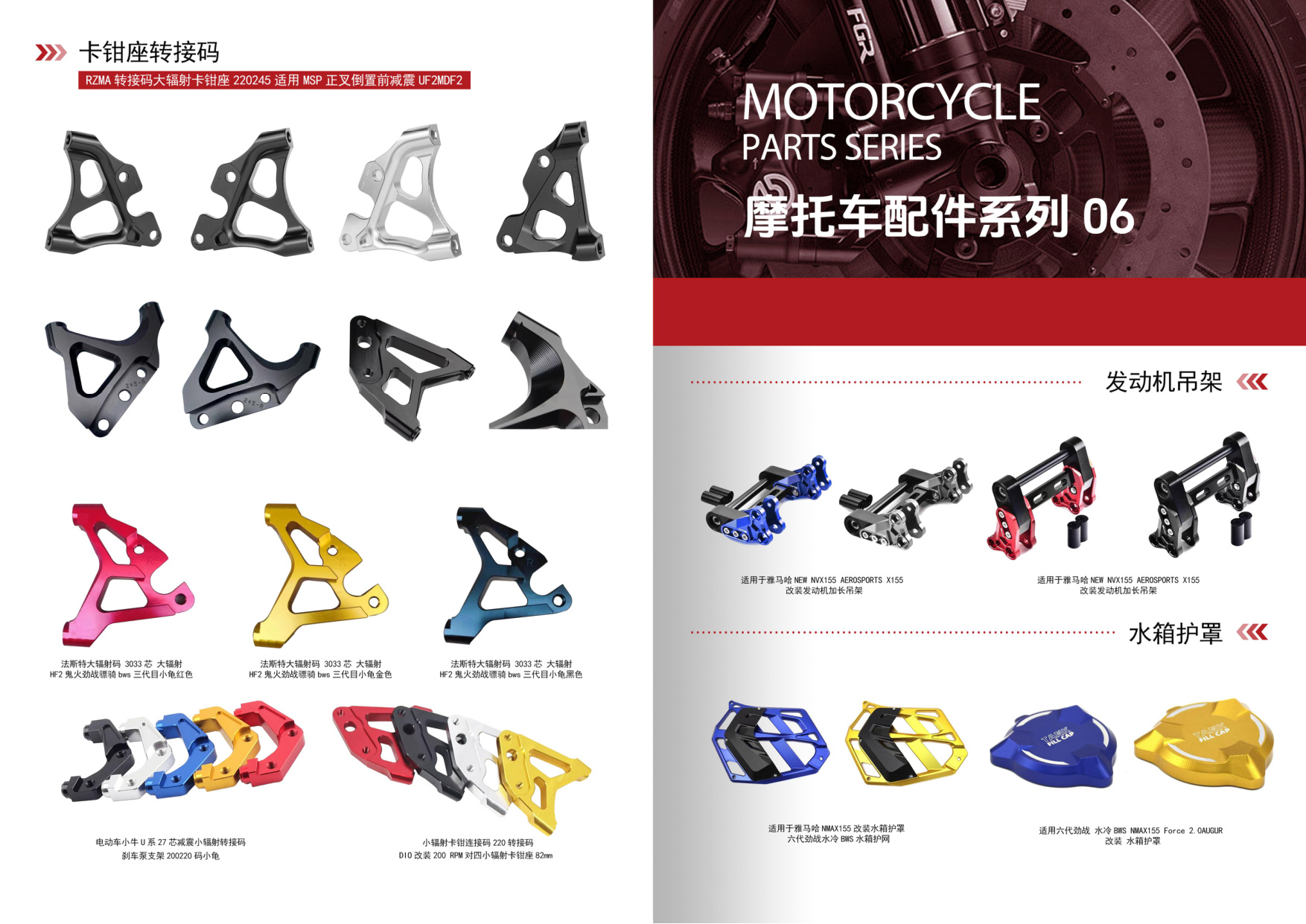
Motorcycle components illustrate the split perfectly. Axles, spacers, pivot bolts, and wheel hubs are classic lathe work. Triple clamps, brake caliper brackets, rearsets, and engine covers lean toward machining centers. A motorcycle parts manufacturer with both capabilities can route each part to the most economical process and combine operations to reduce handling. That is exactly the setup we maintain at Fuxingwang Hardware—founded in 2012 and built around serving riders and brands that demand consistent fit and finish.
How to Choose: A Quick Checklist
- Mostly round and symmetrical? Choose a CNC lathe.
- Pockets, ribs, or features on multiple faces? Choose a machining center.
- Mix of turned and milled features? Ask for a turn-mill or multi-setup plan.
- High volume, round part? Prioritize bar-fed turning.
- Complex, low volume? Prioritize five-axis or multi-axis milling to cut setups.
- Tight tolerance on a specific feature? Specify the datum and let the shop select the process.
Why the Partner Matters More Than the Machine Type
Equipment only tells part of the story. A capable custom CNC machining China partner will review your drawing, flag features that raise cost, suggest process changes, and quote realistically. With 100+ CNC machines across turning and milling, we can quote the same part on multiple routes and show you the trade-offs. Our team also supports material selection, finishing, and inspection reporting so that the parts you receive match the parts you designed.
Get a Free Quote on Your Drawings
Ready to move from drawing to finished part? Send your 2D drawings or 3D models (STEP, IGES, or DWG) to Fuxingwang Hardware Products Co., Ltd. Our engineers will review your precision CNC parts requirements and return a free, no-obligation quote—including recommended process, material, and lead time. Whether your project is a single prototype or a production run of motorcycle components, we will tell you honestly whether a CNC lathe, a machining center, or a combination is the right fit. Contact us today to start the conversation.