Why Aluminum Is the Go-To Material for CNC Machining
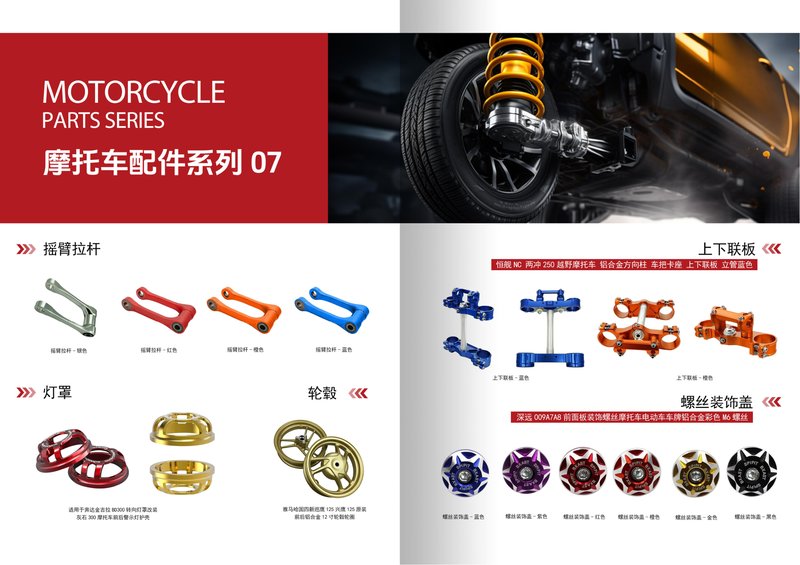
Aluminum is one of the most popular materials in CNC machining because it combines light weight, good strength-to-weight ratio, excellent machinability and natural corrosion resistance. For a motorcycle parts manufacturer, these properties matter: reducing unsprung weight, resisting vibration and holding tight tolerances over thousands of kilometers. At Fuxingwang Hardware Products Co., Ltd. (Jiangmen Fuxingwang Hardware), founded in 2012, we machine aluminum daily across a 2,000 m² factory equipped with 100+ CNC machines, producing both motorcycle parts and precision CNC parts for industrial customers.
This guide explains the aluminum CNC machining process step by step, so buyers know what to prepare, what to expect and where cost and quality are decided.
Step 1: Choosing the Right Aluminum Alloy
Alloy choice drives machinability, strength and finish. Common options include:
6061-T6
The workhorse for custom CNC machining. Good strength, excellent machinability, easy anodizing. Ideal for brackets, mounts, covers and structural motorcycle components.
7075-T6
High strength, closer to steel, but less corrosion-resistant without coating. Used for highly stressed parts such as triple clamps, levers and racing components.
6082 and 5083
6082 offers strength similar to 6061 with good machining; 5083 is chosen for weldability and marine-grade corrosion resistance.
Specify the alloy and temper on your drawing. If you are unsure, our engineering team can recommend the most cost-effective grade for your application.
Step 2: Design for Manufacturability (DFM)
Good design reduces cycle time and scrap. Key rules for aluminum parts:
- Wall thickness: keep at least 0.8–1.0 mm for stable machining; thin walls deflect and chatter.
- Corner radii: internal corners need a radius at least equal to the cutter radius; avoid sharp inside corners.
- Pocket depth: depth-to-width ratio above 4:1 increases tool deflection and cost.
- Tolerances: standard machining holds ±0.05 mm; only call out ±0.01 mm where functionally required.
- Threads and holes: specify thread class and avoid holes deeper than 3× diameter where possible.
A DFM review before quoting is standard practice for any experienced custom CNC machining China supplier and prevents costly surprises later.
Step 3: Programming and Setup
Once the 3D model and 2D drawing are approved, CAM programmers generate toolpaths. For aluminum, high-speed machining strategies with climb milling, high spindle speeds and generous coolant flow deliver clean surfaces and long tool life. Fixtures are designed to hold the part rigidly without marking finished surfaces. First-article inspection confirms the setup before production runs.
Step 4: The Machining Sequence
3-Axis and 4-Axis Milling
Most prismatic precision CNC parts are produced on 3-axis vertical machining centers. Adding a 4th axis allows multiple faces in one setup, improving accuracy and reducing handling.
CNC Turning
Round parts such as axles, spacers and bushings are turned on CNC lathes, often with live tooling for cross-drilling and milling in a single cycle.
5-Axis and Complex Geometry
Complex motorcycle components and custom parts with compound angles benefit from 5-axis machining, which machines contoured surfaces in fewer setups and with better surface finish.
Step 5: Deburring, Surface Finishing and Assembly
After machining, parts are deburred manually or by tumbling. Common aluminum finishes include:
- Anodizing (clear, black or colored) for wear resistance and appearance
- Bead blasting for a uniform matte look
- Powder coating for thick, durable color
- Laser engraving for logos and part numbers
Where required, we also handle assembly of sub-components and hardware installation before packing.
Step 6: Quality Control
Inspection runs throughout production, not only at the end. Typical checks include CMM dimensional verification, caliper and micrometer checks on critical features, thread gauges, surface roughness testing and visual inspection under controlled lighting. For a motorcycle parts manufacturer, batch traceability and documented inspection reports are essential for safety-critical components.
Lead Times and Ordering Tips
Prototype quantities typically ship in 7–15 days; production batches depend on volume and finishing. To get an accurate quote and short lead time, send:
- 3D STEP or IGES files plus 2D PDF drawings with tolerances
- Material and temper, surface finish, and quantity
- Any inspection or certification requirements
Get a Free Quote from Fuxingwang Hardware
With a 2,000 m² factory, 100+ CNC machines and more than a decade of experience since 2012, Fuxingwang Hardware Products Co., Ltd. delivers reliable CNC machining for motorcycle parts and custom industrial components. Whether you need prototype precision CNC parts or repeat production runs, our team is ready to review your design and recommend the most efficient manufacturing route.
Send your drawings today for a free quote and DFM feedback. Email our sales team with your STEP files, quantities and finish requirements, and we will respond with pricing and lead time within one working day.