Introduction to Aluminum CNC Machining
Aluminum is one of the most popular materials for CNC machining, thanks to its excellent strength-to-weight ratio, corrosion resistance, and machinability. For industries like automotive and motorcycles, aluminum precision CNC parts are essential for reducing weight while maintaining performance. This guide walks through the aluminum CNC machining process, from alloy selection to finishing, and explains how to collaborate with a reliable custom CNC machining China partner like Fuxingwang Hardware Products Co., Ltd.
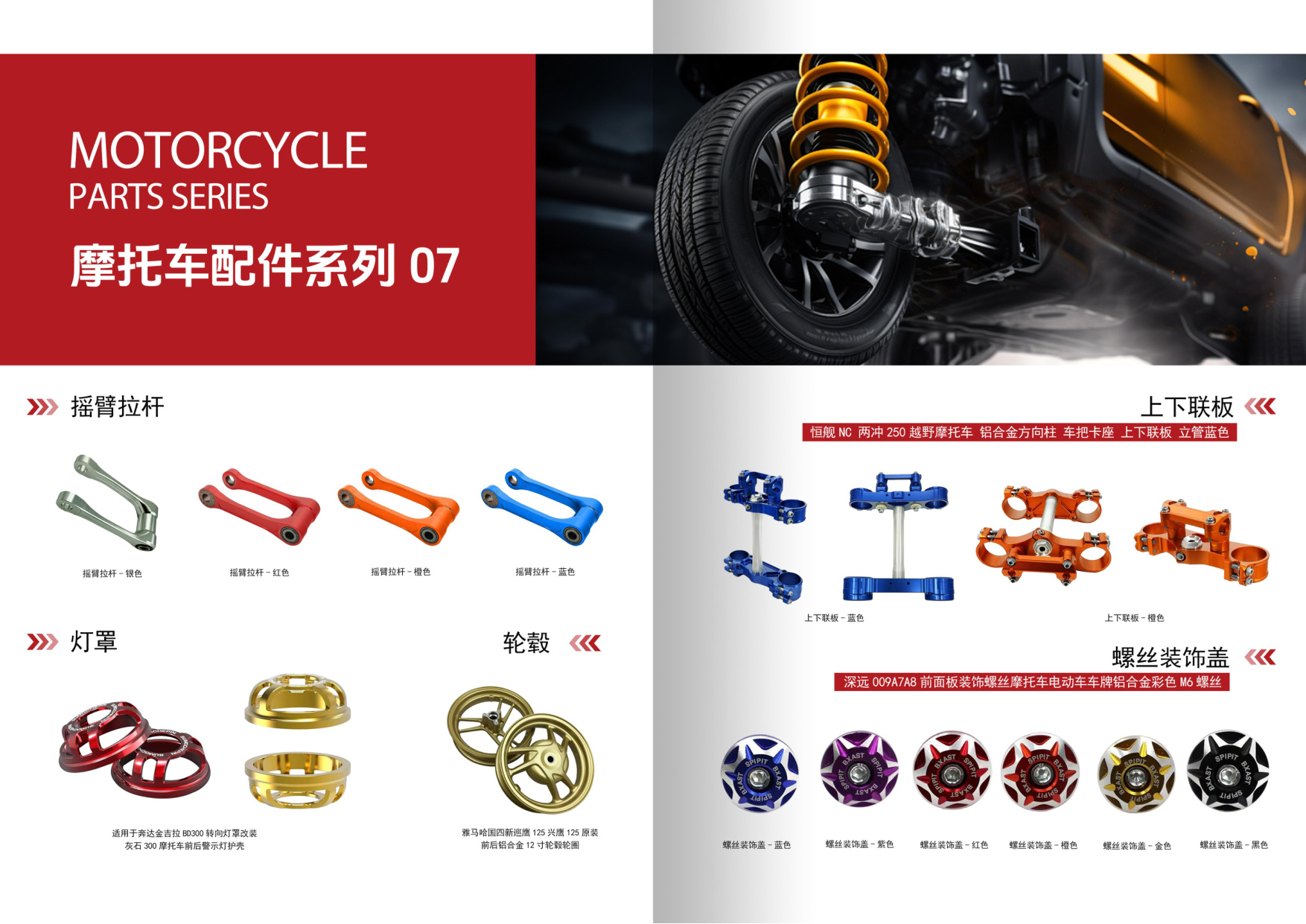
Why Choose Aluminum for CNC Machining?
Aluminum offers several advantages that make it ideal for CNC machined components:
- Lightweight: Density is about one-third that of steel, improving fuel efficiency and handling in vehicles.
- Machinability: Aluminum cuts easily at high speeds, reducing cycle times and tool wear.
- Corrosion resistance: Natural oxide layer protects parts from environmental degradation.
- Thermal conductivity: Useful for heat sinks and engine components.
- Recyclability: Environmentally friendly and cost-effective.
These properties make aluminum a go-to material for motorcycle parts manufacturer applications such as engine covers, brackets, and custom accessories.
Common Aluminum Alloys for CNC Machining
Selecting the right alloy is critical for achieving desired mechanical properties and machinability. Here are the most common grades:
6061 Aluminum
General-purpose alloy with good strength, weldability, and corrosion resistance. Ideal for structural components, brackets, and prototypes.
7075 Aluminum
High-strength alloy with zinc as the primary alloying element. Often used in aerospace and high-stress motorcycle parts like fork clamps and swingarm components.
2024 Aluminum
Excellent fatigue resistance, commonly used in aircraft structures and high-performance automotive parts.
5052 Aluminum
Good formability and corrosion resistance, suitable for sheet metal parts and enclosures.
At Fuxingwang, we help you choose the optimal alloy based on your part’s function, load requirements, and budget.
Step-by-Step Aluminum CNC Machining Process
1. Design and CAD Modeling
The process begins with a 3D CAD model. Design for manufacturability (DFM) is crucial: avoid sharp internal corners, minimize deep pockets, and specify tolerances that match the part’s function. Our engineers review your drawings and provide feedback to optimize for CNC machining.
2. Toolpath Generation and Programming
CAM software converts the CAD model into G-code. We simulate toolpaths to detect collisions and optimize cutting parameters such as spindle speed, feed rate, and depth of cut. For aluminum, high-speed machining techniques are often employed to maximize efficiency.
3. Machine Setup and Fixturing
Proper workholding is essential for precision CNC parts. We use vises, custom fixtures, and vacuum tables to secure the workpiece. Tool selection—including end mills, drills, and taps—is matched to the alloy and feature requirements.
4. CNC Machining Operations
Depending on part complexity, we perform milling, turning, or multi-axis machining. Our 100+ CNC machines include 3-axis and 4-axis vertical machining centers, CNC lathes, and Swiss-type machines, enabling efficient production of both simple and complex geometries.
5. Deburring and Surface Finishing
After machining, parts are deburred manually or via tumbling. Common finishes for aluminum include anodizing (Type II or III), bead blasting, powder coating, and polishing. These enhance corrosion resistance and aesthetics.
6. Quality Inspection
We use calipers, micrometers, height gauges, and CMM (coordinate measuring machines) to verify dimensions against the drawing. First article inspection (FAI) reports are available upon request.
Design Tips for Aluminum CNC Machining
To ensure cost-effective and high-quality results, consider these guidelines:
- Wall thickness: Maintain a minimum of 0.8 mm for aluminum to prevent deflection.
- Radii: Use fillets instead of sharp corners to reduce stress and tool wear.
- Tolerances: Specify only critical tolerances; standard machining tolerance is ±0.1 mm, with tighter tolerances achievable at higher cost.
- Threads: Use standard thread sizes and avoid threads deeper than 3× diameter.
- Surface finish: Specify Ra values based on function; standard machined finish is Ra 3.2 µm.
Why Choose Fuxingwang for Custom CNC Machining China?
Founded in 2012, Fuxingwang Hardware Products Co., Ltd. has grown into a trusted motorcycle parts manufacturer and custom CNC machining China supplier. Our 2,000 sqm factory houses over 100 CNC machines, enabling us to handle everything from prototypes to mass production. We specialize in aluminum precision CNC parts for motorcycles, including engine components, brackets, and custom accessories. With a commitment to quality and quick turnaround, we serve clients worldwide.
Conclusion
Aluminum CNC machining is a versatile process that delivers lightweight, durable, and precise components for demanding applications. By understanding alloy selection, design considerations, and machining steps, you can optimize your parts for performance and cost. Whether you need prototype or production quantities, partnering with an experienced manufacturer is key.
Ready to start your project? Send your drawings to Fuxingwang for a free quote and DFM feedback. Our team will respond within 24 hours with a competitive price and lead time. Contact us today!