Introduction
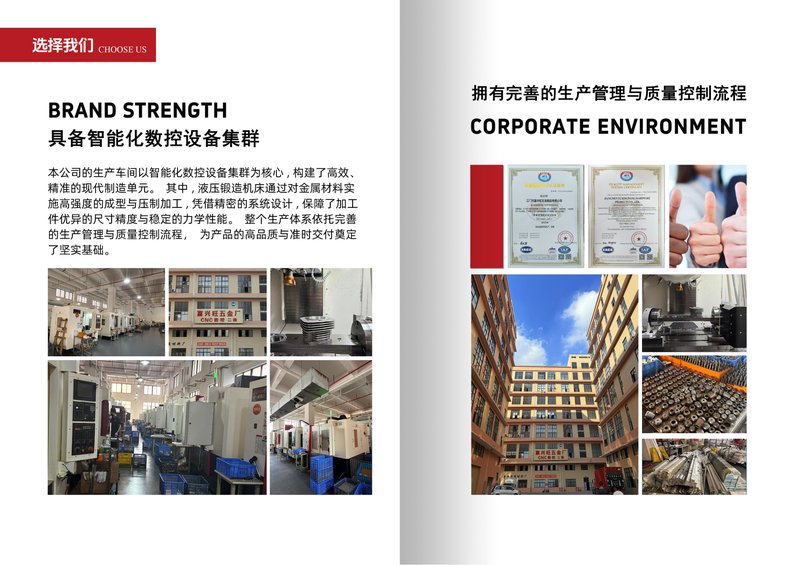
Build-to-print machining is the backbone of modern manufacturing: you send a drawing, and a supplier returns a finished part that meets the spec. Simple in theory, but in practice, even experienced buyers encounter pitfalls that lead to delays, cost overruns, and quality issues. As a motorcycle parts manufacturer and custom CNC machining China specialist since 2012, Fuxingwang Hardware Products Co., Ltd. has seen it all. In this article, we outline seven common pitfalls in build-to-print CNC machining and share practical advice to help you avoid them.
Pitfall 1: Incomplete or Ambiguous Drawings
The most frequent cause of disputes is a drawing that leaves too much to interpretation. Missing tolerances, unclear surface finish requirements, or undefined material grades force the machinist to make assumptions—and assumptions cost money. For precision CNC parts, every dimension and note matters.
How to avoid it:
- Use GD&T (Geometric Dimensioning and Tolerancing) to clearly communicate functional requirements.
- Specify material grade, temper, and any heat treatment or coating.
- Include 3D models (STEP, IGES) alongside 2D drawings to eliminate ambiguity.
Pitfall 2: Over-Specifying Tolerances
While tight tolerances are sometimes necessary, over-tolerancing drives up cost and lead time unnecessarily. For example, calling out ±0.005 mm on a non-critical feature will require additional setups, specialized tooling, and slower machining speeds. In CNC machining, tolerance directly correlates with cost.
How to avoid it:
- Apply tight tolerances only where functionally required.
- Consult your supplier early—experienced machinists can suggest cost-effective alternatives.
- Remember that standard tolerances (e.g., ±0.05 mm) are sufficient for most features.
Pitfall 3: Ignoring Design for Manufacturability (DFM)
A part that looks great on screen may be difficult or impossible to machine efficiently. Deep pockets, sharp internal corners, and thin walls can cause tool deflection, chatter, or breakage. For motorcycle parts manufacturer projects, where weight and strength are critical, DFM is essential.
How to avoid it:
- Incorporate standard tool radii in internal corners (e.g., at least 1/3 of pocket depth).
- Avoid features that require long, slender tools.
- Ask your supplier for a DFM review before production begins—many, like Fuxingwang, offer this as part of the quoting process.
Pitfall 4: Choosing the Wrong Material (or Supplier)
Material selection affects machinability, strength, and cost. Substituting a “similar” alloy without approval can lead to premature failure, especially in safety-critical precision CNC parts for motorcycles. Likewise, sourcing from a supplier who lacks material traceability is risky.
How to avoid it:
- Specify the exact material grade and request mill certificates.
- Verify that your supplier has reliable material sources and proper inventory control.
- For custom CNC machining China projects, confirm the supplier’s experience with your specific material (e.g., aluminum 6061, 7075, stainless steel 304, 316).
Pitfall 5: Neglecting Quality Control and Inspection
Even with perfect drawings, production variations happen. Without a robust quality control process, defects can slip through. Common issues include out-of-tolerance dimensions, poor surface finish, and missing features.
How to avoid it:
- Require first article inspection (FAI) reports.
- Ask about in-process inspection and final inspection protocols.
- Ensure the supplier uses calibrated measurement tools (CMM, optical comparators, etc.).
- Consider third-party inspection for high-value orders.
Pitfall 6: Underestimating Logistics and Communication
International projects introduce time zone differences, language barriers, and shipping complexities. Miscommunication about delivery terms, packaging, or documentation can cause delays at customs or damage parts in transit.
How to avoid it:
- Clarify Incoterms (e.g., FOB, EXW) upfront.
- Agree on packaging standards—especially for delicate precision CNC parts.
- Maintain a single point of contact and use visual aids (photos, videos) during production updates.
Pitfall 7: Skipping the Prototype Stage
Jumping straight into mass production without validating a prototype is a classic mistake. Prototypes reveal design flaws, assembly issues, and performance gaps before committing to tooling and large batches.
How to avoid it:
- Always produce at least one prototype for form, fit, and function testing.
- Use the prototype to refine tolerances and surface finishes.
- Work with a supplier who offers low-volume prototyping alongside full production—like Fuxingwang, with over 100 CNC machines and a 2,000 sqm factory.
Conclusion
Build-to-print machining doesn’t have to be a gamble. By avoiding these seven pitfalls—ambiguous drawings, over-specification, poor DFM, material mistakes, weak quality control, logistics oversights, and skipping prototypes—you can ensure a smooth, cost-effective project. Partnering with an experienced motorcycle parts manufacturer and custom CNC machining China expert like Fuxingwang Hardware Products Co., Ltd. gives you a team that understands these challenges and proactively mitigates them.
Ready to Get Started?
Send us your drawings today for a free, no-obligation quote. Our engineers will review your design for manufacturability and provide a detailed proposal—typically within 24 hours. Whether you need precision CNC parts for motorcycles or custom components for any application, Fuxingwang delivers quality, speed, and reliability. Contact us now to discuss your project.