In motorcycle manufacturing, every gram, every tolerance, and every surface finish matters. From triple clamps and brake caliper brackets to engine covers and swingarm pivots, components must survive vibration, heat cycles, and high loads while fitting together without shims or rework. This is where 5-axis CNC machining has become a decisive advantage for buyers sourcing from a motorcycle parts manufacturer in China.
Why 5-Axis Machining Matters for Motorcycle Parts
Traditional 3-axis CNC machining requires multiple setups: machine one face, flip the part, re-clamp, re-zero, and machine again. Each setup introduces stacking tolerance error, extra labor, and queue time. Five-axis machining adds two rotary axes (A and C, or B and C), so the cutting tool can approach a part from nearly any direction in a single setup.
For motorcycle components, this translates into three practical benefits:
1. Tight positional tolerances on complex geometry
Parts such as fork triple clamps, rearset brackets, and linked brake arms often have features on five or six faces. Drilling bores on intersecting angles, machining angled mounting faces, and cutting relief pockets in one operation keeps hole-to-hole position within ±0.01–0.02 mm. On multi-setup 3-axis work, the same part may drift to ±0.05 mm or worse.
2. Better surface finish and fewer benching hours
Five-axis simultaneous cutting lets the tool stay tangent to curved surfaces, producing smoother blends on fairing mounts, exhaust hangers, and custom covers. Less hand polishing means lower labor cost and more consistent cosmetic quality across production batches—critical when parts are anodized or powder-coated and surface defects become visible.
3. Shorter lead times for prototypes and low-volume runs
Reducing five setups to one or two cuts fixture costs and setup time dramatically. For a company developing a new model or a small run of aftermarket precision CNC parts, this can compress prototype turnaround from weeks to days.
Materials and Components We Machine
Motorcycle parts place distinct demands on material selection and cutting strategy. Typical work includes:
- 6061-T6 and 7075-T6 aluminum: triple clamps, engine covers, sprocket carriers, master cylinder bodies, footpegs. High-speed spindles with through-tool coolant control chip evacuation and prevent built-up edge on deep pockets.
- Stainless steel 304/316 and 17-4PH: brake line fittings, axle spacers, exhaust flanges. Five-axis access allows single-setup drilling of angled banjo bolt holes.
- Steel and alloy steel: steering stems, shock linkage plates, custom brackets. Rigid 5-axis machines with box ways handle interrupted cuts and heavy stock removal.
- Engineering plastics and titanium: intake spacers, custom brackets, and weight-critical race parts where tool path control prevents chatter and heat damage.
What Buyers Should Ask a 5-Axis Supplier
Not every shop advertising five-axis capability runs true simultaneous machining. When evaluating a custom CNC machining China partner, ask these specific questions:
Machine configuration and spindle hours
Are the machines true simultaneous 5-axis (e.g., trunnion or nutating head) or 3+2 position-only? What is the maximum part envelope and spindle speed? Request the machine list—2000 m² factories with 100+ CNC machines should provide this readily.
CAM strategy and verification
Ask how tool paths are verified. Reputable shops use CAM simulation plus on-machine probing and CMM inspection reports for first articles. For safety-critical parts like brake and suspension components, request dimensional reports on key characteristics.
Fixture design and repeatability
Good 5-axis work depends on well-designed custom fixtures. Ask whether fixtures are machined in-house and whether they use modular zero-point systems for repeatable re-clamping across production runs.
Quality management
Confirm ISO 9001 certification, incoming material certificates, in-process inspection frequency, and traceability. A motorcycle parts manufacturer serving OEM or Tier-1 customers should have documented PPAP-style first article inspection capability.
How Fuxingwang Supports Motorcycle Projects
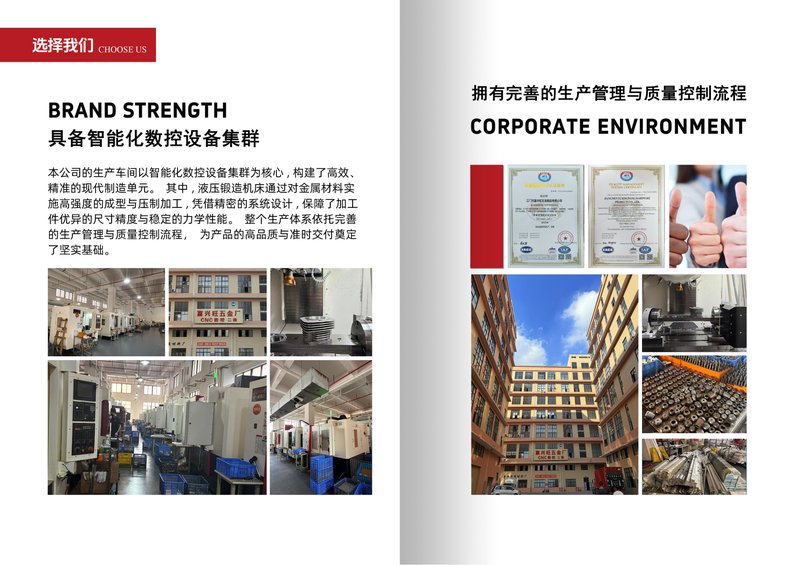
Founded in 2012 in Jiangmen, Guangdong, Fuxingwang Hardware Products Co., Ltd. operates a 2000 m² factory with more than 100 CNC machines, including 5-axis machining centers, turning centers, and multi-axis mill-turn equipment. We produce motorcycle components and custom machined parts from aluminum, steel, stainless steel, and engineering plastics, supporting prototype quantities through medium-volume production.
Our engineering team reviews drawings for manufacturability, proposes tolerance and material adjustments where they reduce cost without compromising function, and provides inspection reports with each shipment. Because we are located in the Pearl River Delta manufacturing cluster, we have fast access to anodizing, plating, heat treatment, and surface finishing partners—so a single supplier can deliver finished, assembly-ready parts.
Ready to Quote Your Next Motorcycle Component?
If you are developing a new triple clamp, rearset, engine cover, or custom bracket and want the accuracy of 5-axis CNC machining without the cost of multiple setups, send us your 2D drawings or 3D STEP files. Fuxingwang offers a free quotation and DFM feedback within 24–48 hours. Include material, tolerance requirements, surface finish, and target quantity, and our engineers will respond with pricing, lead time, and recommended process. Contact us today to start your project.